Why Health Systems Are Flying Blind on Workforce Data
The data exists. The problem is that no one built a system to turn it into intelligence.
6 min read
By Rob Howie, Founder & CEO · Senzo · April 2026
Key Takeaways
- Health systems generate abundant workforce data but lack a purpose-built layer to convert it into operational intelligence
- Manual report assembly creates a lag of days to weeks before workforce patterns become visible to leaders
- The category of purpose-built operational health workforce intelligence software is new and largely unfilled
Ask a senior workforce leader at a large health system how long it takes to answer a seemingly simple question - what is our current vacancy rate by clinical specialty - and you will rarely hear a number smaller than two days. More often, the honest answer is a week. Sometimes more.
This is not a data problem. Health systems generate more workforce data than most industries. Scheduling systems capture every shift. Payroll systems track every hour. HRIS platforms hold every hire, every departure, every leave of absence. The data exists in abundance.
The problem is that none of these systems were designed to talk to each other, and none of them were built with operational intelligence as the output. They were built to execute transactions - to schedule shifts, process payroll, manage records. The intelligence layer was never part of the design. It was assumed someone would build it manually.
And so someone does. Usually a workforce analyst, or a team of them, spending the majority of their time pulling exports from three or four systems, reconciling formats, correcting errors, and assembling a report that will be outdated before it lands in the inbox of the person who requested it.
The cost of the lag
In most industries, a two-day turnaround on operational data would be considered slow but manageable. In healthcare, the lag is genuinely costly.
Overtime spend compounds daily. A unit running 15% above its overtime threshold this week will still be running above threshold next week if no one has visibility into the trend. By the time a manually-assembled monthly report surfaces the pattern, the health system has absorbed weeks of premium labor spend that proactive monitoring could have flagged on day three.
Vacancy pressure works the same way. A clinical specialty with a rising vacancy rate does not announce itself. It accumulates - slowly enough that no single month's data triggers alarm, but persistently enough that by month six, the health system is looking at a recruitment challenge that will take a year to resolve. The intelligence that could have shortened that cycle was buried in a spreadsheet no one was watching continuously.
The category that doesn't exist - yet
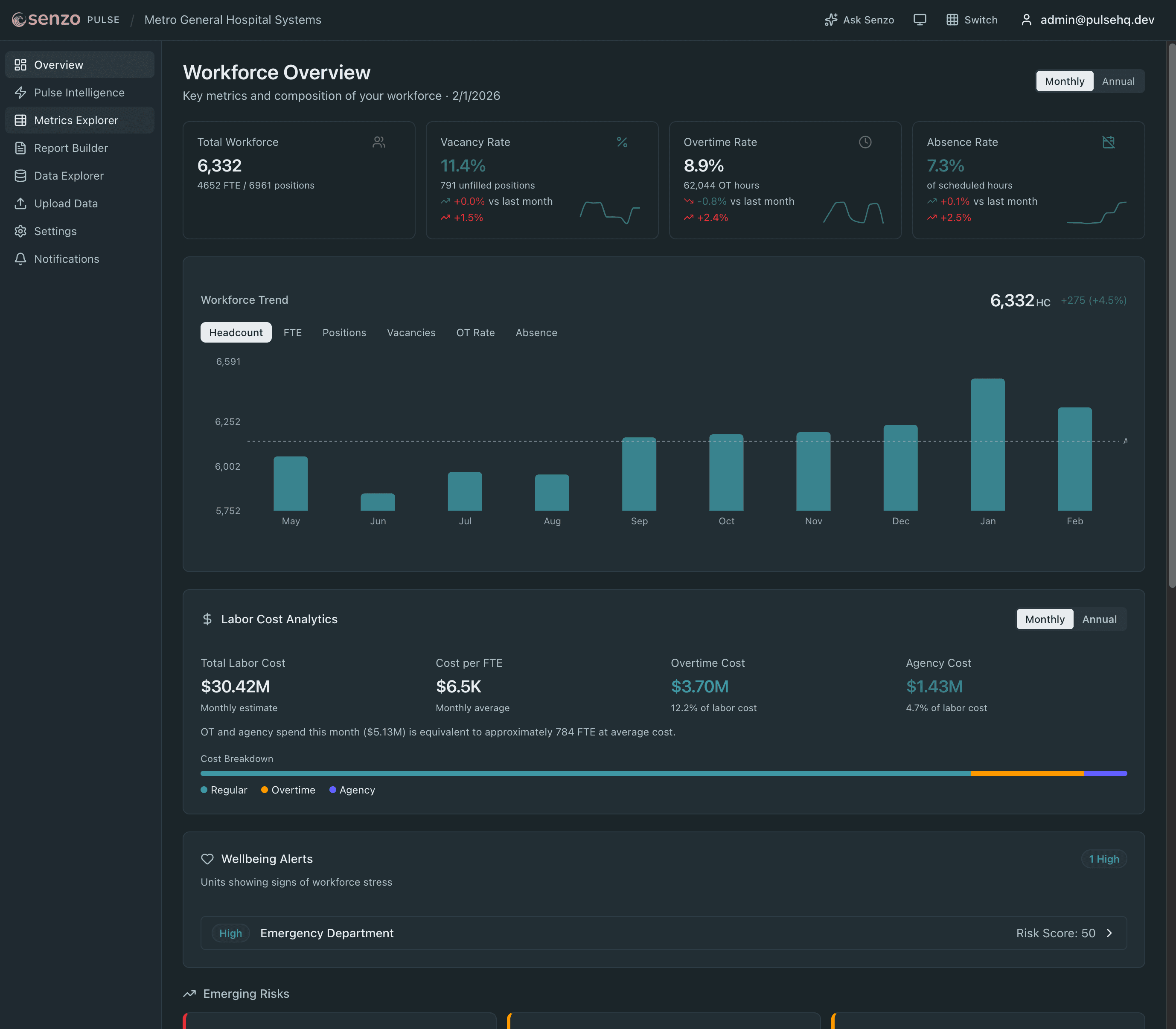
What health systems need is not a better scheduling tool, a more powerful HRIS, or a new consulting engagement. Those exist. What does not exist - or did not, until recently - is a purpose-built operational intelligence layer that sits above the transactional systems, ingests their data, and converts it into continuous, real-time workforce insight.
EHRs were not designed for it. Generic HR analytics platforms were not built around the metrics that matter in healthcare - HPPD, nurse-to-patient ratios, FTE vacancy rates, agency dependency as a percentage of labor cost. Consulting firms can produce excellent point-in-time analyses, but continuous monitoring is not a deliverable a consulting engagement can sustain.
The gap is structural. And it has persisted not because health systems don't want better intelligence, but because no one has built the right tool for the job.
What changes when the intelligence layer exists
The shift from reactive to proactive workforce management is not primarily a cultural one. It is an information one. Leaders don't make reactive decisions because they prefer to - they make them because the information that would enable proactive decisions arrives too late, in the wrong format, at the wrong level of granularity.
When an organization has continuous visibility into vacancy trends, overtime clustering, absence patterns, and workforce flow - updated automatically, broken down by facility, unit, and provider type - the nature of workforce conversations changes. The question stops being “what happened last month” and starts being “what do we do about what's happening now.”
That shift is not incremental. It is the difference between managing a workforce and understanding one.